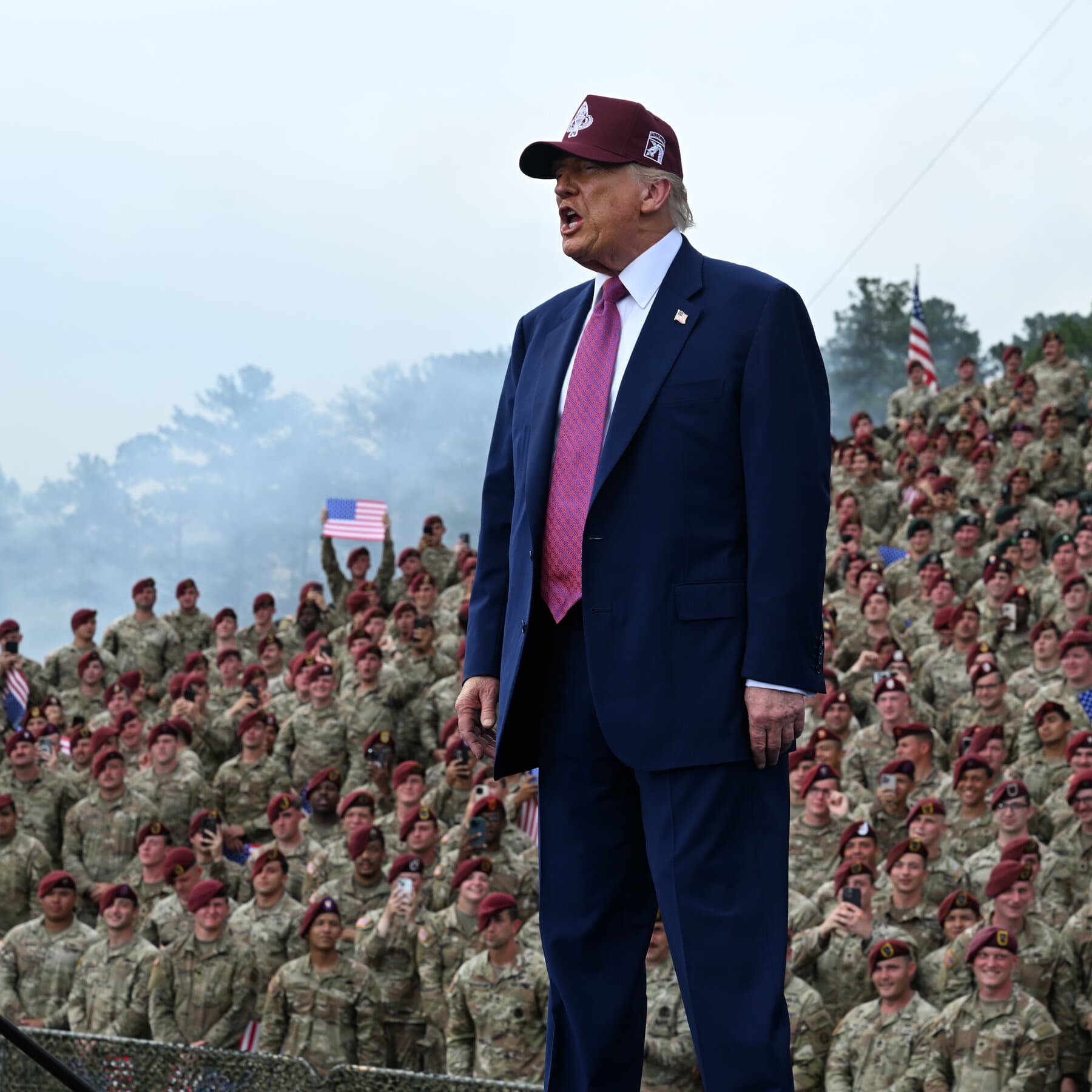
Leading up to last Tuesday’s agreement on a temporary ceasefire, Trump openly stated the intention to bomb Iranian power plants and bridges and perhaps his most alarming statement to date, that “a whole civilisation will die” if Iran were to ignore demands for the opening of the Strait of Hormuz.
Discourse is one side of the coin; however, we have seen more explicit reminders of the Trump administration’s disregard for international law. Trump, himself, when speaking to The New York Times, said he doesn’t “need international law," citing the only limit placed on his power is his “own morality." Further, speaking on US strikes on Iran’s oil-producing Kharg Island, Trump told NBC News that “we may hit it a few more times just for fun."
International bodies, including Amnesty International and a coalition of over 200 human rights organisations, have said that Trump’s actions amount to war crimes under international law, so why are so many news outlets either not using the term “war crime” or indeed still asking the question as to whether or not they do amount to such crimes?
It is easy to attribute the normalisation of such statements to Trump as an individual; we have seen a plethora of his actions and statements that have shaken the markets and seemed to display a disregard for civilian life, both domestically and abroad. On the contrary, however, Trump’s actions may uncover a pattern. The tolerance of such rhetoric and the impunity which follows violations is not necessarily aberrant. Yet, it is the product of a long history of failures to hold military and leadership accountable.
A Pattern of Impunity
From Vietnam to Iraq, the US has on many occasions failed on an institutional level to adhere to international standards with regard to war, and moreover, has not held responsible parties accountable.
Two of the most profound and well-known cases of US military personnel violating international regulations were the My Lai massacre in Vietnam and the abuse of prisoners at Abu Ghraib in Iraq.
On March 16, 1968, US soldiers killed 504 civilians in the town of Son My; only one individual, Lieutenant Calley, was charged, serving just three years under house arrest. Years later, photographs from Abu Ghraib revealed US personnel torturing detainees. A Human Rights Watch survey documented more than 330 cases of abuse involving over 600 individuals. Of these, just 54 were convicted, only 10 receiving sentences of any significance.
Both episodes were treated, alongside countless other crimes brought to light by whistleblowers or through WikiLeaks' publication of classified materials, as isolated incidents, failures of individuals, not of institutions or leaders.
This brings us to the present. As a UN inquiry continues to investigate the bombing of Shajareh Tayyebeh girls' school in Minab that killed between 168 and 175 children, both the UN and the US military's own investigations suggest American forces likely carried out the strike. Over 100 US-based legal scholars signed an open letter, published in Just Security on April 2, stating that the strikes raised "serious concerns about violations of international human rights law and international humanitarian law, including potential war crimes."
Closing Thoughts
Structurally, the US has insulated itself from the mechanisms designed to enforce accountability. It is not a party to the International Criminal Court, and the Trump administration has gone further still, imposing sanctions on ICC judges investigating alleged US and Israeli war crimes, measures international law professor Nancy Combs of William & Mary Law School described to Reuters as designed to "kneecap" the very institution that could intervene.
None of this is to say every allegation is proven. But the pattern is consistent, and accountability is thin. What makes the current moment most distinct is that, under Trump, any veil once in place has been removed. Where previous administrations committed violations and then handled the narrative to portray themselves in a better light, this one openly broadcasts its intent and belittles those in opposition. When a president declares that international law does not apply to him, and faces no meaningful consequence, legal, political nor in the press, normalisation is no longer something that happens purely by chance, but a deliberate policy, followed so that a state may act with impunity. The question is no longer whether these actions cross a line, but whether the line is still there, or indeed ever existed.


.jpg&w=828&q=75)
Discussion
Loading discussion…