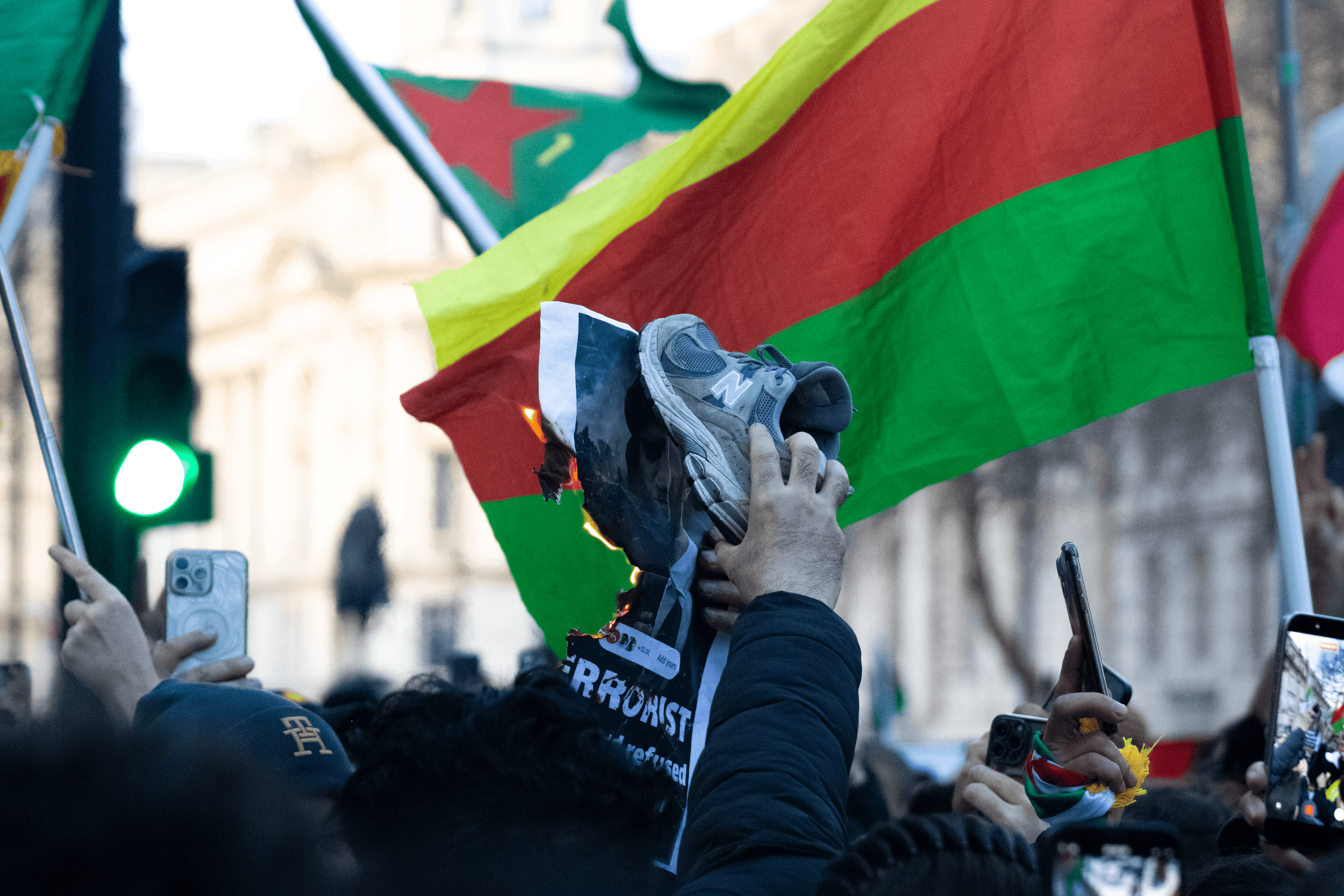
March 2026 — As US and Israeli airstrikes continue to pound Iran, a familiar dynamic is playing out on the war's western front. Kurdish fighters are being courted by Washington as potential ground forces, and wondering, based on bitter experience, whether to trust the offer.
Five major Iranian Kurdish opposition parties formally united in February 2026 under the Coalition of Political Forces of Iranian Kurdistan (CPFIK), declaring their goal of toppling the Islamic Republic and achieving Kurdish self-determination. The coalition's fighters, estimated at between 8,000 and 10,000, are stationed along the Iraq-Iran border, with some of the most battle-hardened units operating out of the Qandil Mountains.
Whether they will actually cross that border remains an open question.
Trump's Mixed Signals
On March 5, President Trump appeared to enthusiastically back Kurdish involvement, saying "I'd be all for it" when asked about a potential Kurdish offensive. Just two days later, he reversed course, telling reporters he did not want the Kurds entering the war and calling the conflict "complicated enough."
According to Axios, Trump personally called the leaders of Iraq's two main Kurdish parties, Masoud Barzani of the KDP and Bafel Talabani of the PUK, the day after strikes on Iran began. Israeli Prime Minister Netanyahu had reportedly lobbied for months to build the US and Kurdish connection, with the Mossad and CIA later joining the effort.
Meanwhile, the CIA has reportedly been in active discussions with Kurdish groups about arming them, though US Secretary of Defense Pete Hegseth stated publicly that "none of our objectives are premised on the support of the arming of any particular force."
A Pattern the Kurds Know Well
This is not the first time Washington has dangled support in front of Kurdish fighters only to pull back. In 1975, President Ford failed to protect the Kurds from a rout by Iraqi forces. In 1988, Reagan did not intervene when Iraq used chemical weapons against them. In 1990, President George H.W. Bush encouraged Kurds to rise against Saddam Hussein after the Kuwait invasion, then stood aside as Iraqi forces crushed the rebellion.
The one time the relationship delivered lasting results was 1991, when a US-enforced no-fly zone over northern Iraq allowed Kurdish parties to build self-governing institutions, eventually codified in Iraq's 2005 constitution as the Kurdistan Regional Government. The CIA also trained and armed the Peshmerga after the 2003 invasion, cementing a military partnership that defined the Kurdish role in post-Saddam Iraq.
More recently, Trump dropped support for Syrian Kurds in 2025, pressuring them to accept the conditions of Syria's new leader after the fall of Assad, a stark reminder that US backing can evaporate with a single policy shift.
The Risks of Joining
Kurdish leaders are openly cautious. Komala leader Abdullah Mohtadi bluntly told a German newspaper: "We will not send our forces to the slaughterhouse." Kurdish officials say they need a no-fly zone, similar to the one that protected Iraqi Kurds in the 1990s, before committing to any ground offensive.
The danger is real and immediate. Iran has already struck Kurdish positions inside Iraqi Kurdistan in retaliation for the US and Israeli campaign, targeting what Tehran called "anti-revolution separatist forces." The Kurdistan Regional Government, caught in the middle, has repeatedly stressed it does not want to be drawn into the conflict.
Analysts warn that the newfound unity among Iranian Kurdish factions may not hold, as historical rivalries, resource competition, and strategic disagreements could fracture the coalition under pressure. And without a broader Iranian opposition movement rallying alongside them, a Kurdish military push risks being isolated and overwhelmed.
For now, the fighters wait on the border, watching the skies, weighing Washington's word, and knowing better than most what broken promises look like.
.jpg)
Discussion
Sign in to join the discussion.
Loading discussion…